10 Kitchen Tools Beginners Actually Need (and 5 to Skip)
When I moved into my first apartment, I did what every excited new cook does: I bought gadgets. A garlic press. An avocado slicer. A banana hanger — a banana hanger! Each one got used exactly once, then rattled around in a drawer I could barely close. Meanwhile, I was trying to chop onions with a dull little paring knife on a cutting board the size of a postcard, and dinner took twice as long as it should have.
Then I spent a weekend at my aunt’s house. She cooked the kind of food people write home about — slow daals, perfect rice, kebabs with real char — and her entire toolkit was a chef’s knife, a wooden board, one battered skillet, and two pots. That was it. Watching her work, I finally understood: tools don’t make the cook, but the right few tools remove every bit of friction between you and dinner.
This guide is the list of kitchen tools for beginners I wish someone had handed me back then. Ten tools worth your money, in the order you should buy them — and five popular ones you can skip without missing a thing.
Quick Stats
- Reading Time: 8 minutes
- Tools Covered: 10 to buy, 5 to skip
- Starter Budget: Roughly the cost of 3–4 takeout dinners, spread over time
- Skill Level: Absolute beginner
What You’ll Need
To use this guide, you need almost nothing: your phone’s notes app (or a scrap of paper) and ten honest minutes. Open your kitchen drawers and look at what’s actually in there. If you own three spatulas but no decent knife, you’re exactly who this is for. Jot down which of the ten tools below you already own — that’s your starting point, and everything else becomes a shopping list you build slowly.
The 10 Tools: Your Buying Order, Step by Step
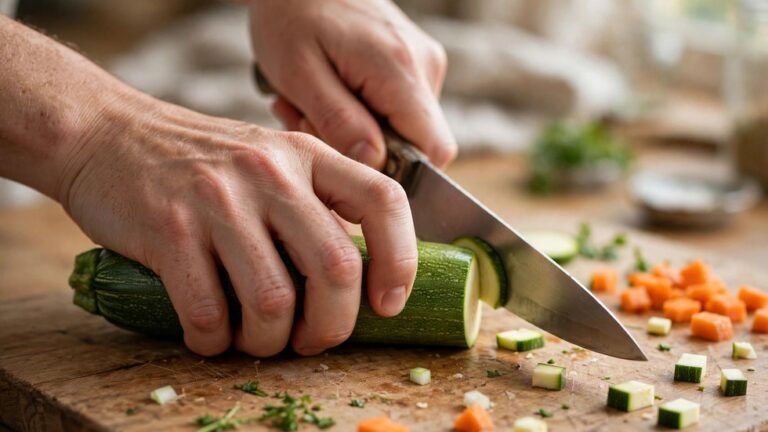
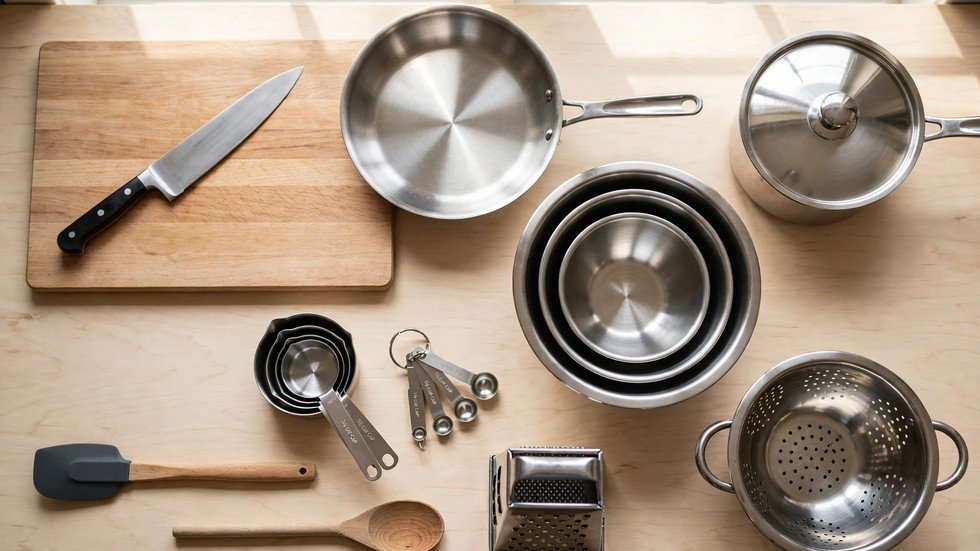
Step 1: Buy an 8-inch chef’s knife — the single most important tool you’ll own. A good chef’s knife handles roughly 90% of all cutting: onions, tomatoes, chicken, herbs, ginger. Everything gets faster and safer the moment your knife is sharp and comfortable. Look for high-carbon stainless steel, a handle that feels secure in your grip, and a full tang (the metal running through the handle). Here’s the budget truth: one decent $25–35 chef’s knife outperforms an entire 15-piece block set. Hand wash it, never put it in the dishwasher, and it’ll serve you for a decade.
Step 2: Get a big, stable cutting board. Small boards are secretly one of the biggest beginner frustrations — food tumbles off the edges and you spend half your time chasing diced onion. Buy the largest board your counter fits, in wood or composite plastic. Skip glass and marble boards entirely; they’re brutal on knife edges and turn a sharp knife dull within weeks.
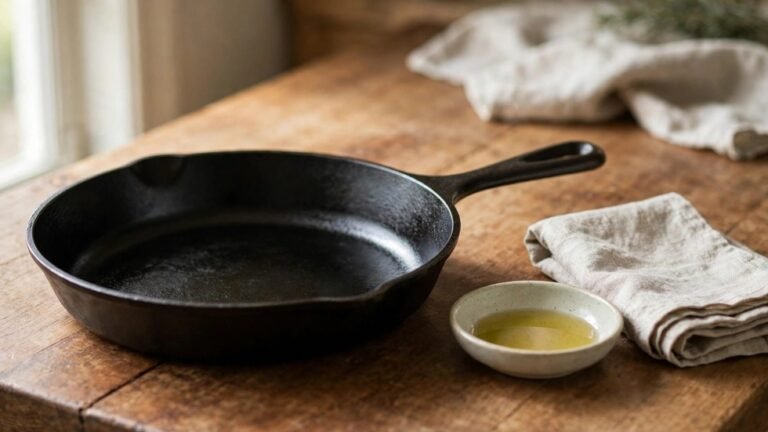
Step 3: Add a 10–12 inch skillet. This is your workhorse: searing chicken, frying eggs, sautéing vegetables, making a quick karahi. Stainless steel or cast iron both work beautifully — stainless is lighter and easier to maintain, cast iron is nearly indestructible and cheap secondhand. If you cook a lot of eggs or fish, a basic non-stick skillet as a second pan is a nice luxury, not a necessity.
Step 4: Buy a medium saucepan with a lid (2–3 quarts). Rice, daal, oatmeal, sauces, reheating soup — the saucepan does all of it. The lid matters more than beginners expect: it traps steam for faster rice, keeps simmering sauces from spattering your stove, and halves boiling time. A heavy bottom prevents scorching, which is the number one way beginners ruin pans.
Step 5: Get a large pot (6–8 quarts). Biryani, pasta, big batches of soup, boiling potatoes for a crowd. If your household cooks a lot of Desi food, a deep, heavy karahi-style wok can fill this slot instead — it’s what I reach for most weeks. Either way, you want one big vessel for big jobs.
Step 6: Pick up a set of nesting mixing bowls. Three bowls that stack inside each other take up almost no space and get used constantly: marinating chicken, tossing salads, holding chopped vegetables while you cook (your mise en place station), even serving. Stainless steel is light, cheap, and dishwasher-safe.
Step 7: Grab a wooden spoon and a flat spatula (turner). The wooden spoon is for stirring — it won’t scratch pans, won’t melt, and won’t conduct heat into your hand. The flat turner is for flipping: eggs, kebabs, pancakes. Between these two, you’re covered for nearly every stirring and flipping job in a beginner kitchen.
Step 8: Buy measuring cups and spoons. “Eyeballing it” is a skill you earn after a year of cooking, not a starting strategy — especially for baking, where ratios are chemistry. A basic set costs almost nothing and removes an entire category of beginner failures. Get the kind with long handles that reach into spice jars.
Step 9: Don’t overlook a box grater. This is the unsung hero of my kitchen. Ginger, garlic, carrots for salad, cheese for pasta, nutmeg, even frozen butter for flaky parathas — a box grater does all of it in seconds. It’s the tool beginners never think to buy and then wonder how they lived without.
Step 10: Finish with a colander or fine-mesh strainer. Draining pasta, rinsing rice and lentils, washing vegetables, straining stock. A fine-mesh strainer doubles for sifting flour and dusting. Get one with a sturdy base that sits flat in the sink — the wobbly ones are an accident waiting to happen.
5 Tools to Skip (and What to Do Instead)
- Garlic press. It takes longer to clean than to mince garlic with your knife — smash the clove with the flat of the blade, rock-chop for twenty seconds, done.
- Avocado slicers, banana slicers, strawberry hullers. Every single-use slicer is a drawer thief. Your chef’s knife (Step 1!) does all of these jobs in seconds.
- Electric can opener. A $10 manual opener is faster, never needs batteries, and takes up no counter space. The only exception is if you need one for accessibility reasons — then it’s genuinely worth it.
- A full knife block set. You’ll use the chef’s knife and maybe the paring knife; the other five will sit there gathering dust while you paid for all seven. Buy knives individually as you actually need them.
- A mandoline slicer (for now). They’re genuinely useful, but they’re also the most common source of beginner kitchen injuries. Your box grater and knife cover 90% of slicing jobs until your knife skills are solid — revisit the mandoline in a year, with a cut-resistant glove.
Pro Kitchen Tips for Kitchen Tools for Beginners
- Buy in priority order, not all at once. Start with the knife, board, and skillet — you can cook 80% of beginner meals with just those three. Add one tool a month and you’ll never feel the cost.
- Check thrift and charity shops first. Cast iron skillets, stockpots, and mixing bowls show up constantly for a few dollars. Cast iron in particular is nearly indestructible — a rusty one just needs scrubbing and re-seasoning.
- Handle comfort beats brand name. Pick up the knife. Hold the pan. If it feels awkward in the store, it’ll feel worse at 7pm when you’re tired. Your hand is the review that matters.
- One quality piece beats five cheap ones. A $30 knife you love gets used daily for ten years. A $10 knife you hate gets replaced in six months — and you spent more in the end.
- Use the 30-day wishlist rule for gadgets. See something tempting? Write it down, wait 30 days. If you still want it and can name three meals you’d use it for, buy it. I’ve “wanted” a spiralizer for three years and never once passed this test.
Troubleshooting Advice
- My drawers are already overflowing with stuff. Apply the one-in, one-out rule from today: every new tool means an old one gets donated. Pull everything out once, keep what you actually used in the last three months, and box the rest for donation. You’ll be shocked how little you miss.
- My knife went dull after two months. Two separate issues here. First, dishwashers and glass boards kill edges — hand wash, and cut only on wood or plastic. Second, learn the difference between honing and sharpening: a honing steel (used weekly) straightens the edge; actual sharpening (every 6–12 months) grinds a new one. Most “dull” beginner knives just need honing.
- Food sticks terribly to my stainless steel pan. This is almost always a heat problem, not a pan problem. Heat the empty pan first, then add oil, then wait until the oil shimmers before adding food. Try the water test: flick in a drop of water — if it dances into a little mercury ball, the pan is ready. If it just sits and sizzles flat, wait longer.
- My non-stick pan is all scratched up. Non-stick coating is consumable, not forever — metal utensils and high heat destroy it. Cook on medium, use wood or silicone tools only, and replace the pan when the coating flakes. Scratched non-stick isn’t just annoying, it’s time for a new one.
- I bought a big set and now I regret it. Don’t beat yourself up — keep the two or three pieces you actually reach for, and gift or donate the rest to someone setting up their first kitchen. Then follow the buying order above for anything missing.
FAQs
How much should a beginner realistically spend on kitchen tools?
Somewhere around the cost of three or four takeout dinners, spread over a few months — and you don’t spend it all at once. The knife, board, and skillet come first (that’s the bulk of it). Everything after that is one small purchase at a time. Cooking at home pays the whole kit back within weeks.
I have a tiny kitchen with almost no storage. What then?
The same ten tools still apply — they were chosen partly because they nest, stack, and hang. Mixing bowls stack, the saucepan lid flips for storage, and a magnetic knife strip on the wall frees an entire drawer. Skip every duplicate: one skillet, one saucepan, one pot. Small kitchens punish clutter, so the “5 to skip” list matters even more for you.
Should I buy a knife set or one good knife?
One good knife, every time. An 8-inch chef’s knife in the $25–40 range will outperform every blade in a cheap block set. If you later find yourself constantly reaching for something smaller, add a single paring knife. Two knives you love beat seven you tolerate.
Here’s my honest summary after years of cooking in small, badly equipped kitchens: the tools serve the cooking, never the other way around. Buy the ten above in order, skip the five traps, and put the money you saved toward good ingredients — that’s the complete kitchen tools for beginners playbook. A sharp knife and fresh vegetables will always beat a drawer full of gadgets and a frozen dinner.
You might also like: 15-Minute Masala Omelette Chapati Wrap