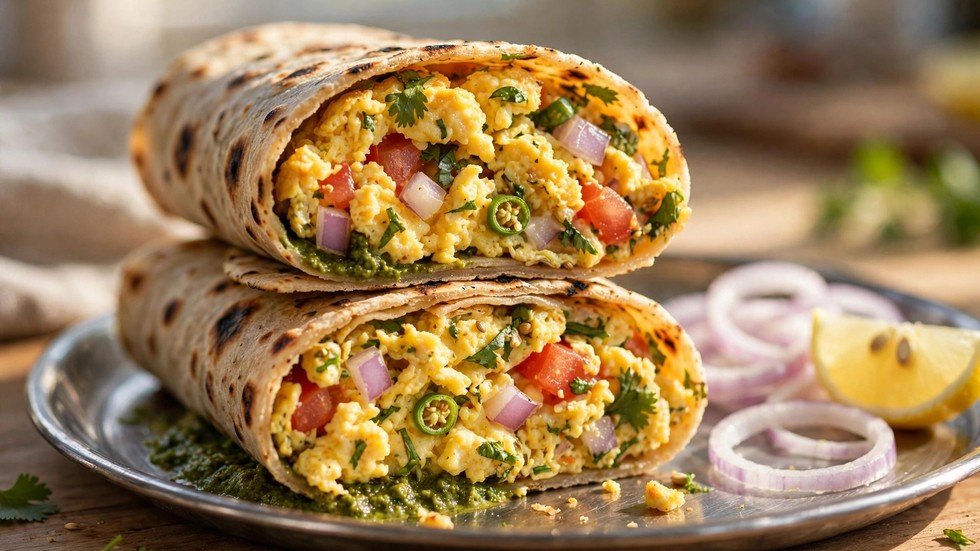
15-Minute Masala Omelette Chapati Wrap
The first time I made this for my husband, he looked at the plate and said, “Is this breakfast or lunch?” — and honestly, that’s the whole beauty of it. It was a rushed weekday morning, the kids needed tiffins, he needed something substantial before a long commute, and a plain omelette felt too sad while a full paratha breakfast would take forty minutes I didn’t have. So I did what desi home cooks have always done: I improvised. I beat the eggs with everything that makes an omelette taste like home — onion, tomato, green chili, coriander, a pinch of haldi and red chili powder — cooked it fluffy in a hot pan, and rolled the whole thing up in a warm chapati with a swipe of green chutney.
He ate it in the car, called me from the office parking lot, and asked me to make it again tomorrow. That was three years ago, and this wrap has been our family’s emergency meal ever since — breakfast, tiffin, light dinner, midnight snack, the thing I make when guests arrive and the fridge is half empty. There’s something deeply satisfying about it: the soft chew of the chapati, the fluffy spiced egg, the cool chutney cutting through the warmth, the little crunch of raw onion. It eats like street food but it’s made from things already sitting in every desi kitchen.
What I love most is how forgiving it is. The omelette doesn’t need to be pretty — it’s getting rolled up anyway. The chapati can be yesterday’s leftovers, reheated soft. And the whole thing genuinely takes fifteen minutes from cracking the first egg to the first bite, most of it hands-off while the pan does the work. If you’ve got eggs, onions, and atta in the house, you’ve got a meal that tastes like you planned it.
Quick Stats for Masala Omelette Chapati Wrap
- Prep Time: 5 minutes
- Cook Time: 10 minutes
- Total Time: 15 minutes
- Servings: 2 wraps (easily doubled)
- Difficulty: Easy
- Best Served With: Green chutney or ketchup, masala chai, and sliced onions with lemon
Equipment Needed
Nothing here should surprise you — this is everyday-kitchen cooking.
- A medium non-stick frying pan or tawa (20–24 cm): Non-stick makes flipping and rolling stress-free, especially if your omelette technique is rusty. A well-seasoned cast iron tawa works too and gives gorgeous charred spots on the chapati. Avoid thin steel pans, which develop hot spots and scorch the egg before it sets.
- A mixing bowl and a fork: For beating the eggs. A fork incorporates air better than a spoon and takes ten seconds — you want the eggs frothy with tiny bubbles, which is what makes the omelette puff up fluffy instead of sitting flat and rubbery.
- A spatula (silicone or wooden): For loosening the omelette edges and folding. Silicone won’t scratch non-stick; wood is fine on iron. You’ll also use it to press the wrap closed for a few seconds so it holds its shape.
- A plate and clean kitchen towel: Warm chapatis wrapped in a towel stay soft and pliable while the omelette cooks. Cold, stiff chapatis crack when rolled — the towel trick is the difference between a wrap that holds and one that falls apart in your hands.
Ingredients & Substitutions
- 4 large eggs: The foundation. Room-temperature eggs beat up fluffier than fridge-cold ones — if you remember, take them out ten minutes early. For a richer wrap, add a splash (1 tablespoon) of milk per two eggs; for a lighter, street-style omelette, skip the milk entirely.
- 2 chapatis or whole wheat parathas: Fresh or leftover — both work. Leftover chapatis just need 20 seconds per side on a hot tawa to go soft again. Parathas make a richer, flakier wrap; plain chapatis keep it light. Store-bought tortillas work in a pinch but the whole wheat flavor of chapati is part of the charm.
- 1 small onion, finely chopped: Finely is key — big chunks stay raw and crunchy in the middle while the egg around them overcooks. Red onion is sweeter and prettier; white onion is sharper. Either is fine.
- 1 small tomato, finely chopped and deseeded: Deseed it — tomato seeds and jelly are mostly water, and watery filling makes a soggy omelette that weeps inside the wrap. Roma or desi tomatoes hold up best; skip watery beefsteak types.
- 1–2 green chilies, finely chopped: This is the heat engine. One for gentle warmth, two for proper desi kick. Remove the seeds for flavor without fire. If cooking for kids, skip the chilies in the egg and serve sliced chilies on the side for the adults.
- 2 tablespoons fresh coriander leaves, chopped: Non-negotiable for me — that fresh, citrusy note is what makes it taste like a desi omelette rather than a Western one. Stems are fine too if chopped fine; they’re actually more flavorful than the leaves.
- ¼ teaspoon turmeric powder (haldi): Gives the omelette its gorgeous golden color and that faint earthy warmth. A little goes a long way — too much turns bitter and stains everything it touches.
- ¼ teaspoon red chili powder: Background heat that blooms into the egg. Kashmiri chili powder gives color with mild heat; regular gives more fire. Adjust to your family’s tolerance.
- ½ teaspoon salt (or to taste): Season the egg mixture well — under-salted eggs taste flat no matter what else you add. Taste a tiny bit of the raw mix if you’re unsure (it’s safe in a tiny taste, I promise).
- 2 tablespoons oil or butter, divided: For cooking the omelettes. Mustard oil gives an incredible pungent depth that screams street-style anda; butter gives richness; neutral oil keeps it light. I use mustard oil when it’s just adults eating.
- 2 tablespoons green chutney (coriander-mint): The cool, tangy swipe inside the wrap that ties everything together. No chutney? Ketchup works, mayo works, even plain yogurt with a pinch of salt works. But green chutney is the move if you have it.
Step-by-Step Method
Step 1: Beat the masala egg mixture (2 minutes). Crack the eggs into a bowl, add the chopped onion, deseeded tomato, green chilies, coriander, turmeric, red chili powder, and salt. Beat with a fork for a good 30–45 seconds until frothy with small bubbles throughout and the vegetables evenly distributed. WHY: Beating air into the eggs is what creates a fluffy, puffy omelette instead of a dense flat one — those tiny air bubbles expand in the pan’s heat and lift the egg. Mixing the masalas directly into the egg (rather than sprinkling on top) means every single bite is seasoned, not just the surface.
Step 2: Warm the chapatis (2 minutes). While the pan heats, warm each chapati on a hot dry tawa for about 20 seconds per side until soft and pliable with a few light char spots, then stack them and wrap in a clean kitchen towel. WHY: Warm chapatis are flexible and roll without cracking; cold ones are stiff and split at the fold. The towel traps steam and keeps them soft while you cook the omelettes — this two-minute step is the entire difference between a wrap that holds together and one that falls apart.
Step 3: Cook the first omelette (3 minutes). Heat 1 tablespoon of oil or butter in the frying pan over medium-high heat until it shimmers. Pour in half the egg mixture and swirl to spread it evenly. Let it set for 30 seconds, then tilt the pan and lift the edges with your spatula, letting uncooked egg flow underneath. Cook 2–3 minutes until the top is just set but still slightly glossy — don’t flip unless you like it browned on both sides. WHY: Medium-high heat gives you the classic street-style texture: lacy, golden-crisp edges with a soft fluffy center. Lifting the edges lets raw egg reach the hot pan surface so the omelette cooks through without needing a flip, which keeps it tender rather than tough. Pull it while the top is just set — it finishes cooking from residual heat, and overcooked egg turns rubbery fast.
Step 4: Cook the second omelette (3 minutes). Slide the first omelette onto a plate, add the remaining oil, and repeat with the rest of the mixture. WHY: Cooking two thinner omelettes instead of one thick one is deliberate — thin omelettes cook through quickly and evenly, roll up neatly, and give you the right egg-to-chapati ratio in every bite. One thick omelette stays raw in the middle while the bottom burns, and it fights you when you try to roll it.
Step 5: Assemble and roll (2 minutes). Lay a warm chapati flat, spread a tablespoon of green chutney down the center, place an omelette on top, add a few raw onion rings and a squeeze of lemon if you like, then fold in the sides and roll it up snugly like a burrito. Press seam-side down in the hot pan for 20 seconds to seal. WHY: The chutney goes directly on the chapati (not on the egg) so its moisture soaks into the bread rather than making the omelette soggy. Pressing the seam in the hot pan lightly crisps it and fuses the wrap shut — without this, the wrap slowly unrolls as you eat it, which is a tragedy nobody deserves.
Step 6: Serve immediately. Cut each wrap in half on a diagonal — it looks beautiful and makes it easier to eat — and serve with extra chutney, ketchup, or achaar on the side. WHY: The diagonal cut shows off the cross-section of golden egg and vegetables, which makes it look as good as it tastes. Serve it hot: a lukewarm wrap loses the contrast between the warm fluffy egg and the cool chutney, and that contrast is half the pleasure.
Pro Kitchen Tips
- Chop everything finely and uniformly. This is the golden rule of omelette fillings. Big chunks of onion stay raw, big tomato pieces release floods of water, and uneven pieces mean some bites are all-egg and others are all-onion. Take the extra minute with the knife — it pays off in every bite.
- Deseed the tomato, every time. I mentioned it in the ingredients but it deserves repeating, because watery omelette is the number one complaint I hear about this recipe. Scoop out the seeds and jelly with a spoon, chop only the firm flesh. Your wrap will thank you by not going soggy in two minutes.
- Mustard oil for the authentic street-cart flavor. If you’ve ever had an anda paratha roll from a roadside stall and wondered why yours doesn’t taste the same, the answer is often mustard oil. Heat it until it just starts to smoke, then let it cool for ten seconds before adding the egg — that tames the raw pungency and leaves a deep, savory warmth.
- Double-wrap for tiffins. If this is going in a lunchbox, wrap the rolled chapati in foil or butter paper after the pan-press. It holds the shape, keeps it warm longer, and — crucially — it still tastes great at room temperature two hours later, which is why it’s become my most-packed tiffin item.
- Make it a dinner wrap with extras. For an evening meal, add a layer of sliced cucumber, shredded cabbage, or even leftover chicken tikka pieces inside before rolling. The base recipe is the canvas; once you’ve got the technique down, the fillings are whatever your fridge offers.
Troubleshooting Advice
- Problem: The omelette tore when I tried to move it. → Cause: It wasn’t set enough on the bottom, or the pan wasn’t hot enough when the egg went in. Fix: Let it cook undisturbed for a full 30 seconds before touching it — the bottom needs to form a skin. Make sure the oil shimmers before pouring. And honestly? A torn omelette still rolls up fine — nobody will ever know.
- Problem: The wrap falls apart / unrolls as I eat. → Cause: Cold stiff chapati, overstuffing, or skipping the seam-press. Fix: Warm chapatis until truly pliable, don’t overfill (one omelette per chapati, not two), fold the sides in before rolling, and always press seam-side down in the hot pan for 20 seconds to seal it shut.
- Problem: Watery liquid pooling inside the wrap. → Cause: Undeseeded tomato, or the omelette sat too long before rolling. Fix: Deseed tomatoes religiously, and assemble the moment the second omelette leaves the pan. If packing for later, let the omelettes cool for 2 minutes before wrapping so steam doesn’t get trapped.
- Problem: The egg tastes bland despite the masalas. → Cause: Under-salting, or the spices were stale. Fix: Salt the egg mixture assertively — eggs need more salt than you think. And check your turmeric and chili powder; ground spices lose punch after 6–8 months. Fresh spices make a startling difference in a dish this simple.
- Problem: Bottom burned before the top set. → Cause: Heat too high, or a thin pan with hot spots. Fix: Medium-high is the ceiling — if your stove runs hot, use medium. Lifting the edges and letting raw egg flow underneath cooks the top without extra time on the burner. A heavier pan distributes heat more evenly and is worth the investment if you make omelettes often.
Masala Omelette Chapati Wrap FAQs
Can I make this with egg whites only?
You can, but you’ll lose the richness that makes this wrap satisfying. If you’re cutting yolks for dietary reasons, use 6 egg whites plus 1 whole egg — that one yolk adds most of the flavor and color back. Beat in a tablespoon of milk for extra fluffiness since whites alone set firmer. Season a touch more aggressively, as whites are blander than whole eggs.
What’s the best chutney to use inside?
Coriander-mint green chutney is the classic and my top pick — its cool tang against the warm spiced egg is the flavor contrast that makes the wrap sing. Second choice: imli (tamarind) chutney for a sweet-sour note, especially good if you added extra chili. In a real pinch, ketchup plus a squeeze of lemon gets you surprisingly close. Avoid very watery chutneys, which soak through the chapati.
Can I meal-prep these for the week?
Partially, yes. Cook a batch of omelettes and store them stacked with butter paper between them in the fridge for up to 2 days. Warm chapatis fresh, reheat an omelette for 30 seconds per side in a hot pan, and assemble — the whole thing takes 3 minutes. I don’t recommend fully assembling ahead, because the chutney softens the chapati over time. Keep components separate and assemble fresh for the best texture.
Fifteen minutes, one pan, ingredients you already own — and a wrap that works for breakfast, tiffin, dinner, or that 11 pm hunger that chai alone can’t fix. This is desi home cooking at its smartest: fast, flexible, and full of flavor. Make it tomorrow morning and watch it become a habit.
You might also like: 15-Minute Chicken Karahi for Busy Weeknights