Hearty Red Lentil Soup on a Budget
There’s a particular kind of cold — the damp, bone-deep kind that settles in during January — that no heater fully fixes. What fixes it is a bowl of something hot, thick, and deeply savory, eaten with both hands wrapped around the bowl. For me, that bowl has always been red lentil soup. My grandmother called it masoor daal and served it when anyone in the house so much as sniffled. I call it the smartest recipe I know.
Here’s the math that sold me forever: a bag of red lentils costs less than a single takeaway coffee, and it makes soup for days. Lentils are protein-rich, fiber-rich, and they practically cook themselves. Red lentils are the laziest of all — they collapse into creaminess with zero blending required, though I’ll show you both ways.
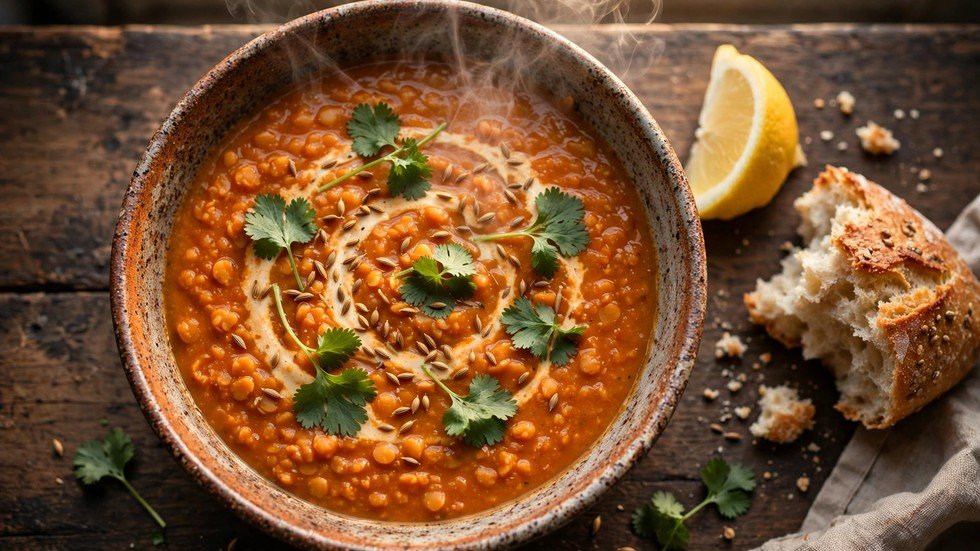
This isn’t a bland health-food soup. It’s built on browned aromatics, toasted spices, and finished with a sizzling tadka of garlic and cumin poured over the top. It tastes like comfort and costs like nothing.
Quick Stats
- Prep Time: 10 minutes
- Cook Time: 25 minutes
- Total Time: 35 minutes
- Servings: 4 generous bowls
- Difficulty: Easy
- Cost Per Serving: Pennies — the cheapest dinner on this site
- Best Served With: Crusty bread, warm naan, or plain rice
Equipment Needed
Soup is forgiving. You need a pot and not much else.
- A large, heavy-bottomed pot or Dutch oven — lentils foam as they cook, so give them room. A 4-liter pot is ideal.
- A sharp knife and cutting board — onion, carrot, garlic, ginger.
- A wooden spoon — for stirring and for mashing lentils against the pot wall if you’re skipping the blender.
- An immersion blender (optional) — for a silk-smooth finish. A potato masher or even just vigorous stirring works for a rustic texture.
- A small frying pan or tadka pan — for the finishing tempering. This five-minute step is what makes the soup taste extraordinary.
Ingredients & Substitutions
- 1½ cups red lentils (masoor daal), rinsed well — the whole point. Red lentils cook faster than any other lentil and dissolve into natural creaminess. Don’t substitute brown or green lentils here; they hold their shape and need twice the time.
- 1 large onion, diced
- 1 large carrot, diced — adds sweetness and body. A small sweet potato works too.
- 3 garlic cloves, minced, plus 2 more sliced thin for the tadka
- 1-inch ginger, grated
- 1 teaspoon cumin seeds, plus ½ teaspoon more for the tadka
- 1 teaspoon ground coriander
- ½ teaspoon turmeric
- ½ teaspoon red chili flakes (optional) — for warmth.
- 1¼ teaspoons salt, plus more to taste
- 6 cups water or vegetable stock — stock adds depth; water is perfectly fine and cheaper. I use water plus one stock cube when I have it.
- 2 tablespoons oil or ghee, divided — half for the base, half for the tadka.
- 1 dried red chili (for the tadka, optional)
- Juice of half a lemon — added at the very end. Non-negotiable, in my opinion.
- Fresh coriander, to serve
Step-by-Step Method
Step 1: Rinse the lentils until the water runs clear. Put the lentils in a bowl, cover with water, swish with your hand, and drain. Repeat two or three times. This isn’t fussiness — rinsing washes away surface starch and dust, which gives you a cleaner-tasting soup and less of that gray foam on top. Pick out any tiny stones while you’re at it; they hide in cheap lentil bags.
Step 2: Soften the aromatics. Heat one tablespoon of oil in your large pot over medium heat. Add the onion and carrot with a pinch of salt and cook 5 to 6 minutes, stirring, until the onion turns translucent and the edges start to golden. This gentle sweating builds the soup’s sweet backbone. Then add the minced garlic and grated ginger and cook one more minute until fragrant.
Step 3: Toast the spices. Add the cumin seeds, ground coriander, turmeric, and chili flakes. Stir for 30 seconds. You’ll smell them bloom — warm, earthy, suddenly much more alive than they were in the jar. Toasting spices in fat (rather than dumping them into water later) is what makes their flavor actually reach the soup instead of floating on top of it.
Step 4: Add lentils and liquid, then simmer. Add the rinsed lentils and 6 cups of water or stock. Stir well, scraping the bottom. Bring to a boil, then reduce to a gentle simmer. Skim off any foam that rises in the first few minutes — it’s harmless, but removing it keeps the soup clear and clean-tasting. Simmer uncovered for 20 to 25 minutes, stirring occasionally. Red lentils are done when they’ve completely fallen apart and the soup looks thick and porridge-like. If you drag your spoon through it, the trail should hold for a second before closing.
Step 5: Blend (or don’t) to your texture. For silky soup, blitz with an immersion blender right in the pot. For rustic soup, mash about a third of it with a potato masher or the back of your spoon and leave the rest chunky. I usually go halfway — mostly smooth with a little texture. If the soup is thicker than you like, stir in hot water a half-cup at a time until it pours the way you want.
Step 6: Make the tadka. This is the flourish that turns good soup into memorable soup. Heat the remaining tablespoon of oil or ghee in your small pan over medium-high heat. Add the ½ teaspoon cumin seeds — they should sizzle immediately. Add the sliced garlic and the dried red chili. Cook, swirling, until the garlic turns golden at the edges, about 60 to 90 seconds. Don’t walk away; garlic goes from golden to bitter in seconds. Pour the entire sizzling mixture — oil and all — over the soup and stir it in. That hot, spiced fat carries flavor into every spoonful.
Step 7: Lemon, salt, serve. Squeeze in the lemon juice and stir. Taste and adjust salt — lentil soup needs confident seasoning, and the lemon will have woken everything up, so taste after adding it. Ladle into warm bowls, top with coriander, and serve immediately with bread for dunking.
Pro Kitchen Tips
- Salt at the end, not the start. With red lentils this is flexible, but I season lightly at the beginning and finalize after the tadka and lemon. Flavors concentrate as soup simmers, and it’s easy to overshoot early.
- Double the batch, always. This soup freezes beautifully for 3 months. Freeze in portion-sized containers and you’ve got instant dinners that beat any ready meal on cost and taste.
- The lemon is not optional. Acid is the difference between a soup that tastes “nice” and one that tastes vivid. Lentils are earthy and mild; lemon lifts them into something bright. Add it off the heat so the fresh flavor survives.
- Ghee for the tadka if you have it. Oil works fine, but ghee adds a nutty richness that makes the whole bowl taste more luxurious. A tablespoon is all it takes.
- Stir the bottom. Lentils settle and can catch. A quick stir every 5 minutes during the simmer prevents scorching and keeps the texture even.
Troubleshooting Advice
- My soup is too thick — it’s like porridge. Red lentils absorb a lot of liquid and keep thickening as they sit. Stir in hot water or stock, half a cup at a time, until it flows. Totally normal, totally fixable.
- Too thin and watery. Simmer uncovered for 10 more minutes, stirring. Or mash more of the lentils — their starch is the thickener. Next time, start with 5 cups of liquid instead of 6.
- It tastes bland and flat. Three fixes in order: more salt, more lemon, and check whether you actually did the tadka. Nine times out of ten, bland lentil soup is under-salted soup. Lentils need aggressive seasoning.
- The lentils aren’t softening. Your lentils are old. Dried lentils don’t last forever — after a year or two they take much longer to cook and never quite go creamy. Buy a fresh bag; they’re cheap.
- The garlic in my tadka burned. The pan was too hot or you looked away. Burnt garlic is bitter and there’s no saving it — wipe the pan and start the tadka over. Golden edges are the target; brown is the cliff.
FAQs
Can I use brown or green lentils instead of red?
You can, but it’s a different soup. Brown and green lentils hold their shape, need 35–40 minutes, and won’t go creamy without thorough blending. They also taste earthier. If that’s what you have, increase the liquid to 7 cups and the simmer to 40 minutes, then blend fully.
Is this soup vegan?
As written with oil and water, yes — completely vegan. If you use ghee for the tadka or chicken stock for the base, it isn’t. The recipe is flexible either way; the flavor holds up beautifully in the fully plant-based version.
How long does it keep?
Four to five days in the fridge — it thickens as it sits, so loosen with water when reheating. Freeze up to 3 months. Reheat gently on the stove rather than blasting it in the microwave, and add a fresh squeeze of lemon after reheating to wake it back up.
Every time I make this soup, I’m reminded that the best recipes aren’t about rare ingredients or clever tricks. A bag of lentils, an onion, some spices, and a little patience — that’s dinner for days, for less than the cost of a snack. My grandmother knew it. Now you do too.
You might also like: 15-Minute Masoor Daal Tadka