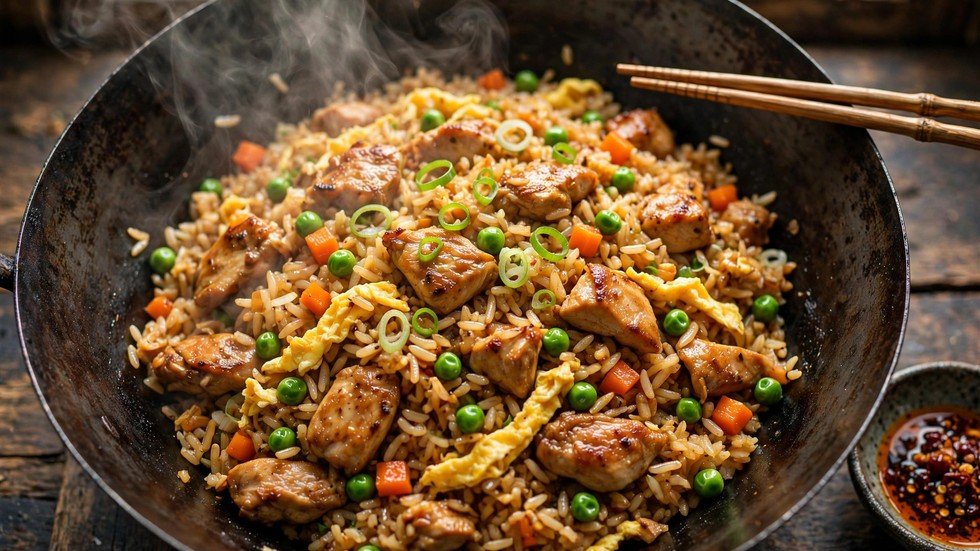
15-Minute Chicken Fried Rice That Beats Takeout
I’ll be honest with you: for years, my homemade fried rice was a sad, soggy embarrassment. I’d cook fresh rice, toss it in a pan with soy sauce and chicken, and end up with something that tasted like… wet rice with stuff in it. Mushy. Clumpy. Grayish. My kids would push it around their plates and ask if we could just order from the takeout place down the road. And you know what? The takeout place’s fried rice was genuinely better than mine, and that stung.
Then a friend’s mother — a woman who has strong opinions about rice and isn’t shy about sharing them — watched me make it once and physically took the spoon out of my hand. “You’re using fresh rice,” she said, like I’d committed a crime. “And your pan isn’t hot enough. You’re steaming it, not frying it.” She taught me the two rules that changed everything: use day-old cold rice, and get the pan screaming hot. The next time I made it, my son took one bite, looked up, and said, “This tastes like the restaurant.” I nearly cried. Fifteen minutes, one wok, and fried rice that genuinely beats takeout — because it’s fresher, you control the salt, and the chicken-to-rice ratio is whatever you damn well please.
Here’s why those two rules matter so much. Freshly cooked rice is full of surface moisture — when it hits the pan, that moisture turns to steam, and steamed rice clumps and goes mushy instead of frying. Day-old refrigerated rice has dried out on the surface; each grain is firm and separate, so it fries into distinct, chewy, slightly crisped grains that soak up sauce without falling apart. And the screaming-hot wok? That’s what gives you wok hei — that elusive smoky breath-of-the-wok flavor that makes restaurant fried rice taste like restaurant fried rice. Cold rice plus violent heat equals magic. Let me show you.
Quick Stats for 15 Minute Chicken Fried Rice
- Prep Time: 5 minutes (plus rice cooked ahead)
- Cook Time: 10 minutes
- Total Time: 15 minutes
- Servings: 3–4
- Difficulty: Easy
- Best Served With: Chili oil or chili crisp on the side, and a simple cucumber salad
Equipment Needed
Fried rice is a technique dish — the equipment genuinely matters more here than in most recipes.
- A wok, or the largest, heaviest skillet you own: A carbon-steel wok is ideal because its shape lets you toss food through zones of intense heat, and it recovers temperature fast when cold ingredients hit it. No wok? Use a large cast-iron skillet — its heat retention is excellent. A thin non-stick pan is the worst option: it can’t get hot enough and the coating hates screaming heat. Whatever you use, it must be big — overcrowding is the enemy.
- A long spatula or wok chuan (shovel): You need to move fast and scrape the pan surface constantly. A metal spatula works on steel, iron, and carbon steel; use wood or silicone on non-stick. The goal is keeping everything in motion so nothing sits and steams.
- A small bowl for the sauce mix: Pre-mixing your soy sauce, oyster sauce, and sesame oil means you can add everything in one pour during the frantic final minutes. Measuring mid-cook while the wok smokes is how things burn — have it ready.
- A plate for the cooked chicken: You’ll sear the chicken first, remove it, then add it back at the end. This two-stage method is the difference between juicy chicken and dry chewy nuggets, so have a plate waiting by the stove.
Ingredients & Substitutions
- 3 cups day-old cooked long-grain rice (about 1½ cups uncooked), refrigerated overnight: THE key ingredient. Cook it the night before (or morning-of), spread on a tray to cool, then refrigerate uncovered or loosely covered. The cold air dries the grain surfaces — that’s what lets them fry instead of steam. No day-old rice? Spread fresh rice on a tray and refrigerate for at least 2 hours, or freeze for 30 minutes. Jasmine rice is classic; basmati works beautifully too and my desi household usually has it. Avoid short-grain or sticky rice — it clumps no matter what you do.
- 250 g boneless chicken breast or thigh, cut into small bite-size pieces: Thighs stay juicier and forgive overcooking; breast is leaner but dries out faster, so cut it small and cook it hot and fast. Bite-size means roughly 1.5 cm cubes — small pieces cook through in 3–4 minutes and distribute evenly through the rice.
- 2 eggs, lightly beaten: They get scrambled right in the wok into silky ribbons that weave through the rice. Beat them just until combined — over-beaten eggs make foam, not ribbons.
- 3 tablespoons neutral oil with a high smoke point (divided): Peanut, sunflower, or avocado oil. You need oil that won’t smoke itself into bitterness at high heat — olive oil is wrong here. Mustard oil is too pungent for this dish; save it for the omelette wrap.
- 2 tablespoons soy sauce: The main seasoning. Light soy for salt and flavor; if you only have dark soy, use 1 tablespoon dark + 1 teaspoon extra salt, since dark soy is less salty but colors aggressively.
- 1 tablespoon oyster sauce: Adds a deep, savory-sweet umami that soy sauce alone can’t give. Vegetarian mushroom “oyster” sauce works identically. Skip it if you must, but add an extra teaspoon of soy and a pinch of sugar.
- 1 teaspoon sesame oil: Finishing oil, not cooking oil — its delicate nutty aroma dies in high heat. Drizzle at the very end, off the heat, so the fragrance survives to the table.
- 3 spring onions, sliced (whites and greens separated): Whites go in early with the aromatics; greens go in at the end for fresh color and bite. If you only have regular onion, use ¼ finely diced onion for the base and skip the green garnish — or use coriander leaves, which my family honestly prefers.
- 2 garlic cloves, minced: Added with the spring onion whites. It perfumes the oil in seconds — don’t let it brown or it turns bitter.
- 1 teaspoon fresh ginger, grated: That warm background hum that makes it taste like real Chinese takeout rather than soy-sauce rice. In a pinch, ¼ teaspoon dry ginger powder works, but fresh is noticeably better.
- ½ cup frozen peas and diced carrots (mixed): The classic takeout vegetable duo. No thawing needed — they go straight from freezer to screaming wok and cook in 2 minutes. Fresh diced carrot works too; just dice it small (5 mm) so it cooks through in time.
- ½ teaspoon white pepper (or black pepper): White pepper is the authentic takeout seasoning — it has a sharper, more floral heat than black pepper. Black pepper is a fine substitute; use slightly less.
- ½ teaspoon salt, plus more to taste: The soy sauce does most of the salting, so start conservative. Taste at the end — you can always add, never subtract.
- 1 teaspoon sugar (optional): A tiny pinch balances the saltiness and helps the rice caramelize to a gorgeous golden color. You won’t taste sweetness; you’ll taste depth.
Step-by-Step Method
Step 1: Prep everything before the heat goes on (5 minutes). Break up the cold rice with your fingers or a fork so there are no clumps — every grain should be separate. Mix the soy sauce, oyster sauce, and sugar in the small bowl. Slice spring onions, mince garlic, grate ginger, beat eggs, dice chicken. Line everything up by the stove. WHY: Fried rice cooks in about 8 minutes of violent, continuous motion — there is genuinely no time to chop or measure once the wok is hot. Restaurant cooks call this mise en place, and for fried rice it’s not a nicety, it’s survival. Thirty seconds of fumbling for the soy sauce is thirty seconds of your rice steaming instead of frying.
Step 2: Sear the chicken screaming-hot (3–4 minutes). Heat 1 tablespoon of oil in the wok over the highest heat your stove can produce until it just starts to smoke. Add the chicken in a single layer, don’t touch it for 90 seconds, then toss and cook 2 more minutes until golden at the edges and just cooked through. Remove to the plate. WHY: That initial undisturbed 90 seconds is where the golden sear happens — the Maillard reaction needs direct, sustained contact with ripping-hot metal, and it can’t happen if you’re stirring. Moving the chicken off the heat the moment it’s done (then adding it back later) is what keeps it juicy; chicken left in the wok while rice cooks turns to rubber.
Step 3: Scramble the eggs (1 minute). Add another teaspoon of oil to the still-hot wok, pour in the beaten eggs, and scramble quickly with big sweeping motions for 30–45 seconds until just set in soft ribbons. Remove to the chicken plate. WHY: Eggs go in alone because they need barely any time — mixed into the rice from the start, they’d overcook into dry yellow bits. Soft, barely-set ribbons stay silky, and cooking them separately takes less than a minute.
Step 4: Fry the aromatics and vegetables (2 minutes). Add the remaining oil, then the spring onion whites, garlic, and ginger. Stir-fry 30 seconds until fragrant — you’ll smell it instantly. Add the peas and carrots, toss for 1–2 minutes until the peas are bright green and everything sizzles. WHY: Thirty seconds is all aromatics need in a hot wok; any longer and garlic burns. The vegetables hit the screaming-hot surface and sear rather than steam, which keeps peas sweet and snappy instead of dull and mushy. That sizzle sound is your quality control — if it’s quiet, your wok isn’t hot enough.
Step 5: Fry the rice (3–4 minutes). Add all the cold rice, breaking up any remaining clumps with the spatula. Spread it across the wok surface, let it sit 30 seconds to crisp, then toss and repeat for 3–4 minutes until the grains are hot through, separate, and starting to toast golden in spots. WHY: This is the heart of the dish. Cold, dry grains hitting screaming metal = frying, not steaming. The press-and-toss rhythm gives maximum surface contact for those coveted crispy-chewy bits while keeping everything moving so nothing burns. If your rice is clumping here, your wok wasn’t hot enough or the rice wasn’t dry enough — both fixable next time, and still delicious this time.
Step 6: Sauce at the edges, then toss everything together (2 minutes). Push the rice to the center, exposing the hot wok surface around the edges. Pour the sauce mixture around the exposed edges — it will hiss and caramelize on contact. Toss everything vigorously for 60 seconds so the caramelized sauce coats every grain. Add back the chicken and egg, toss 30 seconds more, then kill the heat and drizzle over the sesame oil and spring onion greens. Toss once more and serve immediately. WHY: Sauce at the edges is the pro move — soy sauce hitting bare screaming-hot metal caramelizes in seconds, developing a smoky depth (part of that wok hei magic) that you never get from pouring sauce onto rice. Off-heat sesame oil keeps its fragrance; spring onion greens stay bright and fresh instead of wilting into sadness.
Pro Kitchen Tips
- The rice MUST be cold and dry — no exceptions. This is the hill I will die on. If you forgot to cook rice last night, cook it now, spread it on the biggest tray you own, and blast it in the freezer for 30 minutes while you prep everything else. It won’t be perfect-day-old, but it’ll be 80% of the way there, which beats fresh rice by a mile.
- High heat the entire time — no medium, no low. Fried rice is a full-commitment dish. If your stove is weak (many home stoves are), cook in two smaller batches rather than one crowded wok — overcrowding drops the temperature and you’re back to steaming. Two hot batches beat one lukewarm mountain every single time.
- Break up the rice before it hits the wok, not in it. Cold rice clumps are stubborn; trying to smash them apart in a screaming-hot wok wastes precious seconds and cools the pan. Take two minutes at the prep stage to crumble every grain separate with your fingers. Your future self, mid-toss with smoke in your face, will be grateful.
- Taste and adjust salt at the very end. Soy sauces vary wildly in saltiness, and the rice keeps absorbing as it sits. Finish the dish, taste a spoonful, then adjust — a splash more soy, a pinch of salt, or a few drops of sesame oil. Seasoning to your actual soy sauce beats any fixed measurement.
- Day-old basmati is my secret weapon. My household cooks basmati most nights, and leftover basmati makes phenomenal fried rice — the long grains stay distinct and the faint nutty aroma plays beautifully with sesame oil. If your fridge has last night’s basmati, you’re already halfway to dinner.
Troubleshooting Advice
- Problem: The rice turned out mushy and clumpy. → Cause: Rice was too fresh/wet, or the wok wasn’t hot enough — the two classic failures. Fix: For this batch, spread it on a tray and give it 5 minutes under a hot grill to crisp up; it’ll rescue the texture somewhat. Next time: refrigerate the rice overnight uncovered, and don’t add rice until the wok is smoking.
- Problem: Everything tastes flat despite the soy sauce. → Cause: Sauce poured onto rice instead of caramelized at the edges, or under-seasoning overall. Fix: The edge-caramelization step adds enormous depth — don’t skip it. Also check: did you add the sugar? That tiny teaspoon builds background complexity. A final drizzle of sesame oil and a pinch of white pepper at the end wakes up flat fried rice instantly.
- Problem: The chicken is dry and chewy. → Cause: It stayed in the wok too long, or the pieces were too big. Fix: Cut pieces small (1.5 cm), sear hot and fast, remove immediately, add back only for the final 30-second toss. Chicken thighs are far more forgiving than breast — switch if dryness keeps happening.
- Problem: The bottom scorched / bitter black bits everywhere. → Cause: Heat too high for your pan, or food sat too long without tossing. Fix: There’s a line between caramelized and burnt — keep things moving, especially after adding the sauce (sugar burns fast). If it’s badly scorched, the bitter flavor permeates; honestly, it’s faster to start the rice step over than to serve bitter fried rice.
- Problem: The wok keeps cooling down when I add ingredients. → Cause: Too much food at once, or a thin pan that can’t hold heat. Fix: Cook in batches — chicken first, removed; rice in one or two batches if your wok is small. Let the wok reheat for 30–60 seconds between additions until it smokes again. Patience between steps beats rushing into a lukewarm pan.
15 Minute Chicken Fried Rice FAQs
Can I use freshly cooked rice if I don’t have day-old rice?
You can get close with two emergency tricks: spread fresh rice on a large tray in a thin layer and refrigerate uncovered for at least 2 hours, or freeze it for 30 minutes. Both pull surface moisture off fast. What you must never do is use hot, steamy fresh rice straight from the cooker — that’s the direct road to mush. Plan ahead when you can; the overnight fridge method is genuinely superior.
What if I don’t have a wok?
Use the largest, heaviest skillet or sauté pan you own — cast iron is excellent because it holds heat. The keys are the same: ripping hot, don’t overcrowd, keep things moving. Cook in batches if needed. What won’t work well: a small saucepan (steams everything), or a thin non-stick pan on maximum heat (can’t get hot enough and the coating suffers). Size and heat retention matter more than the wok shape itself.
How do I make this vegetarian?
Skip the chicken and oyster sauce (use mushroom vegetarian “oyster” sauce or an extra teaspoon of soy plus a pinch of sugar). Add 200 g of diced firm tofu — press it dry, sear it exactly like the chicken until golden, and remove it the same way. Or go all-vegetable: double the peas and carrots and add diced bell pepper, corn, and mushrooms. The technique — cold rice, screaming heat, sauce at the edges — stays exactly the same, and it’s just as good.
That’s it — the two rules (cold rice, violent heat) and fifteen minutes stand between you and fried rice your family will choose over takeout. My kids did, and they’ve never looked back. Cook your rice tonight, and thank yourself tomorrow.
You might also like: 15-Minute Garlic Butter Pasta (One Pan)