15-Minute Soy-Garlic Shrimp Stir-Fry
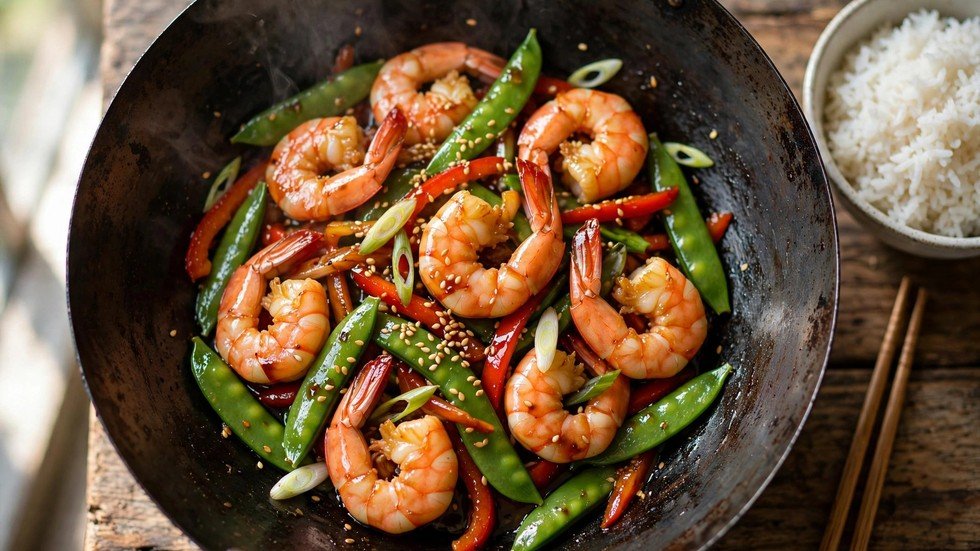
This 15 minute shrimp stir-fry is the weeknight cheat code nobody talks about enough. Chicken needs ten minutes. Beef needs resting. Shrimp? Ninety seconds a side and it’s done — which means the real battle in a stir-fry isn’t the protein at all. It’s everything around it: the sauce, the heat, the order things hit the pan.
I learned this the embarrassing way. My first few stir-fries were sad affairs — rubbery shrimp swimming in a thin, grey sauce with floppy vegetables. The problem was never the recipe. It was me crowding the pan, dumping cold sauce over everything, and treating shrimp like chicken. Once I fixed the technique, this became the fastest dinner in my rotation: fifteen minutes from fridge to table, and honestly better than the takeout place down the road that charges me four times the ingredient cost.
The sauce is the whole personality here. Soy for salt and depth, a mountain of garlic, a spoon of honey to round the edges, and chili for a slow background warmth. It clings to every shrimp in a glossy coat. My kids call it “the shiny shrimp.” I’ll take it.
Quick Stats for 15 Minute Shrimp Stir-Fry
- Prep Time: 8 minutes
- Cook Time: 7 minutes
- Total Time: 15 minutes
- Servings: 2–3
- Difficulty: Easy
- Best Served With: Steamed jasmine rice or noodles
Equipment Needed
Stir-fry is a equipment-light dish, but the one thing that matters is heat.
- A wok or your largest, heaviest skillet — the pan needs to stay ripping hot when cold shrimp land in it. Thin pans drop temperature instantly and then you’re boiling shrimp in their own juice. Cast iron or carbon steel wins here.
- Tongs or a wide spatula — for flipping shrimp fast without breaking them.
- A small bowl — for mixing the sauce before cooking starts. Never measure sauce ingredients into a screaming-hot pan mid-cook.
- Knife and cutting board — garlic, ginger, vegetables. Everything sliced before the flame goes on.
Ingredients & Substitutions
For the shrimp:
- 400g large shrimp, peeled and deveined — fresh or frozen (thawed). Size matters: tiny shrimp overcook before you can blink. Go large. Pat them very dry with paper towels — this is the single biggest factor in getting a sear instead of a steam.
- 1 tablespoon cornstarch + 1 tablespoon water — the slurry that turns the sauce glossy and thick enough to cling. Mix it before you start cooking.
For the sauce:
- 3 tablespoons soy sauce — regular, not dark. Dark soy is for color; you want the clean saltiness of light/regular soy here.
- 4–5 garlic cloves, minced — yes, that’s a lot. It’s a garlic stir-fry; commit.
- 1 tablespoon honey — balances the salt and helps the sauce caramelize onto the shrimp. Brown sugar works in a pinch.
- 1 teaspoon chili flakes or 1 fresh red chili, sliced — background warmth, not a burn.
- 1 teaspoon rice vinegar or lemon juice — a little acid at the end wakes everything up.
- 1 teaspoon sesame oil — finishing oil only. It burns over high heat, so it goes in off the flame.
For the stir-fry:
- 2 tablespoons neutral oil — vegetable, canola, or peanut. Not olive oil; its flavor fights the sauce and it smokes too early.
- 1 red bell pepper, sliced into strips
- 100g snap peas or green beans, trimmed — whatever crisp vegetable you have. Broccoli florets work too, cut small.
- 3 spring onions, sliced — whites and greens separated. Whites go in early, greens at the end.
- 1 teaspoon toasted sesame seeds — for serving.
Step-by-Step Method
Step 1: Prep everything and mix the sauce. Peel and devein the shrimp if needed, pat completely dry, and set aside. Slice all vegetables. In the small bowl, whisk together the soy sauce, minced garlic, honey, chili flakes, and rice vinegar. Stir the cornstarch slurry separately. A stir-fry moves too fast for measuring spoons once the heat is on — this is the entire game.
Step 2: Sear the shrimp hot and fast. Put your wok over the highest heat your stove offers. Add one tablespoon of neutral oil. When it shimmers and just starts to smoke, lay the shrimp in a single layer. Don’t touch them for 90 seconds. Here’s why: shrimp cook through conduction, and constant poking cools the pan surface and prevents browning. After 90 seconds, flip each one — they should have golden spots — and cook 60 seconds more. They’ll be pink, curled into a loose C, and just opaque. Pull them out onto a plate immediately.
Step 3: Stir-fry the vegetables, hardest first. Same wok, still on high heat, another tablespoon of oil. Add the bell pepper strips and snap peas first — they need the most time. Toss constantly for 2 minutes. You want them bright and crisp-tender, not soft. Vegetables keep cooking off the heat, so pull them while they still have bite.
Step 4: Bloom the aromatics. Push the vegetables to the sides, add the spring onion whites to the center with a tiny drizzle of oil, and stir for 20 seconds until fragrant. This is called blooming — the hot oil pulls the flavor compounds out of the aromatics before the liquid sauce arrives. Skip it and the onion tastes raw; do it and the whole dish smells like a restaurant.
Step 5: Add the sauce and thicken it. Pour in the sauce mixture and let it come to a hard boil — about 30 seconds. Now stir the cornstarch slurry once more (it settles) and drizzle it in while tossing. The sauce will turn glossy and thicken enough to coat a spoon within seconds. This only works at a boil: cornstarch needs heat to activate. A lukewarm sauce plus slurry just gives you cloudy, thin liquid.
Step 6: Bring it all together. Return the shrimp to the wok. Toss everything for 30 seconds — just long enough to reheat the shrimp and coat every piece in sauce. Thirty seconds, then off the heat. Shrimp go from perfect to rubbery in under a minute of extra cooking, so this step is quick by design.
Step 7: Finish and serve. Drizzle over the sesame oil and scatter the spring onion greens and sesame seeds. Serve immediately over steamed rice. Stir-fry waits for no one — it starts losing its magic the moment it sits.
Pro Kitchen Tips for This 15 Minute Shrimp Stir-Fry
- The C versus O test. A perfectly cooked shrimp curls into a loose C shape. An overcooked one tightens into a tight O. When you see O’s, you’ve gone too far. Pull shrimp at C, every time — carryover heat finishes them.
- Frozen shrimp are completely fine. Thaw them in a colander under cold running water for 5 minutes, then pat aggressively dry. The drying matters twice as much with thawed shrimp because they hold extra water.
- Velveting is optional but lovely. If you have an extra 10 minutes (not counted in the 15), toss the shrimp with a teaspoon of cornstarch and a splash of soy before cooking. It forms a silky coating that keeps them juicy — the trick Chinese restaurants use.
- Sauce ratio is a formula, not a recipe. Three parts salty (soy), one part sweet (honey), plus acid and heat to taste. Once you internalize that, you can riff endlessly — swap honey for brown sugar, add oyster sauce, throw in ginger.
- Double the sauce, thank yourself later. It keeps in the fridge for two weeks and turns plain noodles, fried rice, or grilled chicken into dinner in minutes.
Troubleshooting Advice
- My shrimp turned out rubbery. They overcooked — it happens in under a minute. Next time, pull them at the loose-C stage and remember they cook a little more in the final 30-second toss. There’s no fixing rubbery shrimp, only preventing it.
- The sauce is thin and watery. Either the slurry went into a sauce that wasn’t boiling, or you skipped the slurry entirely. Fix: bring the sauce to a hard boil and drizzle in a fresh teaspoon of cornstarch mixed with cold water. It’ll tighten up in seconds.
- The garlic burned and tastes bitter. It went into oil that was too hot, or sat too long before the sauce arrived. Garlic burns in under a minute over high heat. Keep it moving, and get the sauce in quickly — the liquid stops the browning instantly.
- Everything tastes flat. You probably need more acid or more salt, in that order. A squeeze of lemon or an extra splash of vinegar brightens a stir-fry more than any spice. Taste, adjust, taste again.
- The vegetables went soggy. The pan was crowded or the heat was too low. Stir-fry in batches if your wok is small — two quick batches beat one steamed pile every time.
15 Minute Shrimp Stir-Fry FAQs
Can I use frozen shrimp for this stir-fry?
Yes — I do it all the time. Thaw under cold running water for about 5 minutes, then pat them very dry with paper towels. Excess water is the enemy of a good sear. Don’t thaw in the microwave; it starts cooking the edges unevenly and you’ll get rubbery spots.
Can I make the sauce ahead of time?
The sauce base (soy, garlic, honey, chili, vinegar) keeps in a jar in the fridge for up to two weeks — I always keep a batch. Don’t add the cornstarch slurry until cooking day, though; it loses its thickening power sitting in liquid. Mix the slurry fresh in 10 seconds.
What can I use instead of soy sauce?
Tamari is the closest swap and it’s gluten-free. Coconut aminos work but are sweeter, so halve the honey. In a real pinch, a tablespoon of oyster sauce plus a pinch of salt gets you into the same neighborhood, though the flavor profile shifts slightly richer.
Fifteen minutes, one wok, zero takeout containers — that’s this 15 minute shrimp stir-fry. Once the sequence clicks — sear the shrimp, char the veg, boil the sauce, toss it all home — you’ll wonder why you ever ordered this. My wok barely gets a day off now.
You Might Also Like
If you love quick seafood dinners, try our 15-Minute Chicken Fried Rice That Beats Takeout next — another 15-minute weeknight winner.