15-Minute Masoor Daal Tadka
Growing up, daal showed up on our dinner table every other day, and I used to roll my eyes at it. Chicken was exciting. Daal was just… Tuesday. Then I moved into my own place, started cooking for myself, and within a month I understood everything. Daal is the backbone of a desi kitchen. It’s cheap, it’s filling, it asks almost nothing of you — and when it’s done right, with that sizzling tadka poured over the top, it’s the kind of comfort that no takeout box has ever delivered.
Masoor daal — red lentils — is the weeknight hero of the lentil world. Unlike chana or toor daal, it needs no soaking and no pressure cooker. It practically melts into a creamy soup in about ten minutes flat. The whole dish comes together in fifteen, and most of that is just the pot doing its thing while you slice garlic for the tempering.
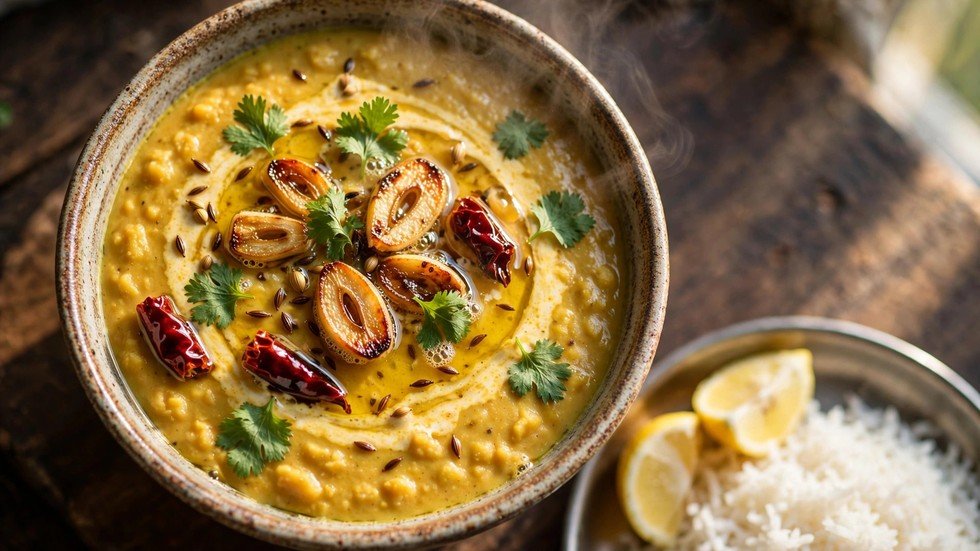
The tadka is where the magic happens, and I mean that literally — the moment hot ghee hits the bowl of daal, it hisses and crackles and the smell of toasted cumin and garlic fills the whole kitchen. My neighbor once knocked on my door mid-tadka to ask what I was cooking. That’s the power of a proper tempering. It takes a humble pot of lentils and turns it into something people remember.
Quick Stats for 15 Minute Masoor Daal Tadka
- Prep Time: 3 minutes
- Cook Time: 12 minutes
- Total Time: 15 minutes
- Servings: 4
- Difficulty: Easy
- Best Served With: Steamed basmati rice, chapati, or just a spoon
Equipment Needed
Nothing fancy here — daal is peasant food in the best possible way, and the equipment list shows it.
- A medium heavy-bottomed pot or saucepan — heavy bottom matters because lentils sit on heat for ten minutes and thin pots scorch them at the base. Any decent stainless steel or non-stick pot works.
- A small tadka pan — that tiny pan with the long handle. If you don’t own one, a small steel ladle held over the flame works in a pinch, but a tadka pan costs almost nothing and you’ll use it constantly.
- A whisk or wooden spoon — for giving the daal a few vigorous stirs at the end. This is what makes it creamy.
- A knife and cutting board — just for garlic, chilies, and coriander.
Ingredients & Substitutions
For the daal:
- 1 cup masoor daal (red lentils) — pick through them quickly for any tiny stones, then rinse until the water runs clear. Don’t skip the rinse: it washes off surface starch and dust, which means less foam and a cleaner-tasting daal.
- 3 cups water — a 1:3 ratio of daal to water gives you a nicely thick but pourable daal. It thickens as it sits, so err on the looser side.
- ½ teaspoon turmeric — for that gorgeous golden color and gentle earthiness.
- 1 teaspoon salt — added at the start so it seasons the lentils all the way through.
- 1 small tomato, chopped (optional) — I add one when I have it. It melts away completely and adds a subtle tang.
For the tadka (tempering):
- 2 tablespoons ghee — this is the soul of the dish. Ghee carries the tempering flavors into every spoonful in a way oil can’t match. If you must substitute, use any neutral oil, but the dish loses its signature richness.
- 1 teaspoon cumin seeds — they should sizzle and darken the second they hit the hot ghee. That sizzle means their essential oils are waking up.
- 4–5 garlic cloves, thinly sliced — sliced, not minced. Slices turn golden and crisp at the edges; mince just burns. This distinction matters more than you’d think.
- 2 dried red chilies — they add smokiness and color more than fierce heat.
- A pinch of hing (asafoetida, optional) — my grandmother’s secret. It adds a deep savory note that makes people ask what’s in the daal. Skip it if you don’t have it; the dish still shines.
- ½ teaspoon red chili powder — added off the heat so it blooms in the residual warmth without burning.
To finish:
- Fresh coriander leaves, chopped — a small handful.
- Lemon wedges — a squeeze at the table brightens the whole bowl.
Step-by-Step Method
Step 1: Rinse the daal and get it on the heat. Pick through the lentils, rinse them in a fine sieve until the water runs mostly clear, and tip them into your pot with the 3 cups of water, turmeric, salt, and the chopped tomato if using. Put it over high heat. This takes about a minute of actual work — the pot does the rest.
Step 2: Boil, skim, and simmer for 10–12 minutes. Bring it to a rolling boil, then drop the heat to medium. You’ll see some white foam rise — skim it off with a spoon. That foam is just released starch and impurities; removing it keeps the daal tasting clean. Let it bubble away for 10 to 12 minutes, stirring once or twice. You’ll know it’s done when the lentils have completely collapsed and lost their shape. Masoor daal doesn’t hold its form like other lentils — it surrenders into creaminess, which is exactly what we want.
Step 3: Whisk it creamy. Take the pot off the heat and give the daal a vigorous whisking for about 30 seconds — or mash it a few times with the back of your spoon. This breaks up any remaining lentil bits and releases starch, turning the texture from brothy to velvety. If it looks too thick, stir in a splash of hot water. Remember it thickens further as it cools, so aim for slightly looser than your ideal serving texture.
Step 4: Make the tadka — and time it right. While the daal rests, heat the ghee in your tadka pan over medium-high heat until it’s hot and shimmering. Add the cumin seeds — they should crackle immediately. Ten seconds later, add the sliced garlic and dried red chilies. Stir constantly. You’re watching the garlic like a hawk here: you want it golden at the edges, which takes about 30 to 45 seconds. Golden garlic is sweet and nutty. Brown garlic is bitter, and there’s no fixing it. When the garlic turns, pull the pan off the heat, add the hing and chili powder, and swirl — the residual heat blooms them perfectly without scorching.
Step 5: Pour, sizzle, and cover. Pour the entire sizzling tadka — ghee and all — directly into the pot of daal. It will hiss dramatically. That’s the sound of flavor. Immediately cover the pot with a lid and leave it for one full minute. This traps the aromatic steam and forces all that toasted cumin-garlic fragrance down into the daal instead of letting it escape into your kitchen (much as your kitchen will smell incredible anyway).
Step 6: Finish and serve. Stir the daal well to distribute the tempering, scatter over the fresh coriander, and serve hot with rice or chapati and lemon wedges on the side. That first squeeze of lemon over the top — don’t skip it. The acidity cuts through the richness of the ghee and makes every flavor pop.
Pro Kitchen Tips
- Don’t skimp on the ghee. Two full tablespoons might sound like a lot, but the tadka is a flavor delivery system and ghee is the vehicle. This is not the place for restraint — it’s the entire point of the dish.
- Slice garlic, don’t mince it. I said it above and I’ll say it again because it’s the most common mistake. Minced garlic goes from raw to burnt with almost no golden stage in between. Slices give you a wide, forgiving window and turn beautifully crisp.
- Keep the daal looser than you think. Daal thickens noticeably as it sits — the bowl you serve five minutes later will be thicker than the pot you finished. If anything, add an extra splash of hot water before the tadka goes in.
- The one-minute covered rest is non-negotiable. It sounds fussy. It isn’t. That trapped steam is carrying toasted cumin and garlic aroma into every spoonful. Skip it and half your tempering’s perfume floats away into the room.
- Double the tadka, thank yourself later. Make twice the tempering and keep half in a small jar in the fridge. It keeps for a week and instantly upgrades plain rice, khichdi, or even instant noodles.
Troubleshooting Advice
- My daal is too thick and gluey. You either used too little water or let it sit too long. Fix it now: stir in hot water a quarter cup at a time until it flows. Next time, remember the 1:3 ratio and serve promptly.
- My daal is too thin and watery. The lentils need more time, or the ratio was off. Simmer uncovered for a few more minutes, stirring — the starch will thicken it. A vigorous whisking also helps enormously.
- The garlic in my tadka turned bitter. It went past golden to brown. There’s no rescue for burnt garlic — the bitterness spreads through the whole dish. Pour it out, wipe the pan, and redo the tempering with fresh ghee. It takes ninety seconds. Worth it.
- The daal tastes flat despite the tadka. Almost always under-salting. Lentils need assertive seasoning. Add salt in small pinches, stir, taste, repeat. Also check your lemon — acidity is often the missing piece people mistake for missing salt.
- My lentils are still hard after 12 minutes. Your daal is old. Lentils lose moisture as they age and take longer to soften — very old ones may never fully collapse. Buy from a shop with good turnover, and store lentils airtight for no more than six months.
15 Minute Masoor Daal Tadka FAQs
Can I use other lentils instead of masoor?
You can, but the timing changes completely, which defeats the 15-minute promise. Moong daal (yellow lentils) is the closest substitute at about 15–20 minutes. Toor daal and chana daal need 30+ minutes or a pressure cooker. Masoor is genuinely the fastest-cooking lentil, which is why this recipe exists around it.
Can I make daal tadka without ghee?
Yes — use a neutral oil like sunflower or a light olive oil. The dish will still be tasty and comforting. But I’d be honest with you: ghee is doing heavy lifting here, both in flavor and in how the tempering aromas bloom. If dairy is the issue, a good vegan butter is a closer substitute than plain oil.
Does daal tadka keep well as leftovers?
It keeps beautifully in the fridge for 3–4 days in a sealed container — arguably it tastes even better the next day as the flavors settle. It’ll thicken in the fridge, so loosen it with a splash of water when reheating. Refresh it with a small fresh tadka of just cumin and garlic if you want that just-made sizzle again.
Daal tadka is proof that the simplest food is often the best food. Fifteen minutes, one pot, a handful of lentils — and a sizzle at the end that never gets old, no matter how many times I make it. My younger self would be shocked to hear me say this, but these days, daal isn’t just Tuesday. It’s the meal I crave.
You might also like: 15-Minute Chicken Karahi for Busy Weeknights