Air Fryer Seekh Kebabs at Home
There’s a specific smell that tells you air fryer seekh kebabs are being made properly — minced meat hitting fierce heat, fat dripping, spices blooming in the smoke. I grew up chasing that smell at roadside BBQ stalls, watching the kebab-wallah fan the coals one-handed while the skewers hissed. When I moved into an apartment with no grill, no balcony, and a very strict smoke alarm, I assumed that smell was off-limits.
My first attempt at homemade seekh kebabs was a tragedy in three acts: half the mince slid off the skewers into the pan, the survivors came out dry as chalk, and the smoke alarm performed admirably. But I kept at it, because the craving doesn’t negotiate. What I eventually figured out is that the air fryer — of all things — is a brilliant kebab machine. It blasts the intense, all-around heat that a tandoor gives, minus the charcoal. And the mince mixture itself needed rethinking: wetter is not juicier, leaner is not healthier-tasting, and the onion is either your best friend or the reason everything falls apart.
This recipe is the result of maybe thirty batches. The kebabs come out juicy in the middle, charred at the edges, and they actually stay on the skewer. Here’s the whole method.
Quick Stats
- Prep Time: 25 minutes (+ 30 minutes chilling)
- Cook Time: 12–14 minutes
- Total Time: About 1 hour 10 minutes
- Servings: 4 (makes 8–10 kebabs)
- Difficulty: Easy-Medium
- Best Served With: Hot naan, onion rings, lemon wedges, mint chutney
Equipment Needed
- An air fryer — basket or oven style both work. You’ll cook in one uncrowded layer, so a larger basket saves you a second batch.
- A large mixing bowl — the mince needs vigorous kneading, and a cramped bowl makes a mess of your countertop.
- Skewers, preferably flat metal ones — flat skewers grip the mince and stop it spinning when you turn them; round skewers let the kebab rotate while the skewer stays put, which is maddening. No skewers? You can shape free-form kebabs — more on that below.
- A small bowl of water — for wetting your hands while shaping. Dry hands stick to the mince and tear the surface.
- An instant-read thermometer — the difference between juicy and dry is about five degrees, and guessing is how you lose.
- Perforated parchment liners or foil — catches dripping fat and saves you scrubbing the basket. If using foil, crinkle it loosely so air still circulates.
Ingredients & Substitutions
- 500g minced beef or lamb, 15–20% fat — fat is non-negotiable. It bastes the kebab from the inside as it cooks and carries all the spice flavor. Ultra-lean mince gives you dry, crumbly kebabs no technique can rescue. Ask your butcher for a coarser grind if you can; it gives better texture than supermarket-fine mince.
- 1 medium onion, grated and squeezed bone-dry — the single most important prep step in this recipe. Onion adds sweetness and moisture, but its water content is what makes kebabs slide off skewers and fall apart. Grate it, then wring it in a clean cloth until not another drop comes out.
- 1 tablespoon ginger-garlic paste — fresh and punchy. It perfumes the meat from within.
- 2 green chilies, minced very fine — distribute the heat evenly. Big chunks create hot spots and weak points in the kebab structure.
- 2 tablespoons fresh coriander, finely chopped — adds freshness and little green flecks. Stems are fine; they’re full of flavor.
- 1 teaspoon cumin powder, 1 teaspoon coriander powder, 1 teaspoon garam masala — the classic backbone. Toast whole spices and grind them if you want to show off; the difference is real.
- 1 teaspoon Kashmiri red chili powder — for that deep restaurant-red color with moderate heat. Regular chili powder works but runs hotter; halve it if you’re sensitive.
- 1½ teaspoons salt — mince needs assertive seasoning. Under-salted kebabs taste flat no matter how good the spices are.
- ½ teaspoon ajwain (carom seeds), lightly crushed (optional) — the secret-weapon spice of proper seekh kebabs, with a thyme-like sharpness. Optional, but it adds unmistakable authenticity.
- 2 tablespoons roasted gram flour (besan) — the binder. Dry-roast it in a pan for 2 minutes until nutty-smelling; raw besan tastes pasty. It absorbs stray moisture and glues everything together. Substitute: 1 tablespoon cornstarch in a pinch.
- 2 tablespoons melted ghee or butter, for brushing — brushed on before and after cooking for color, sheen, and that final richness.
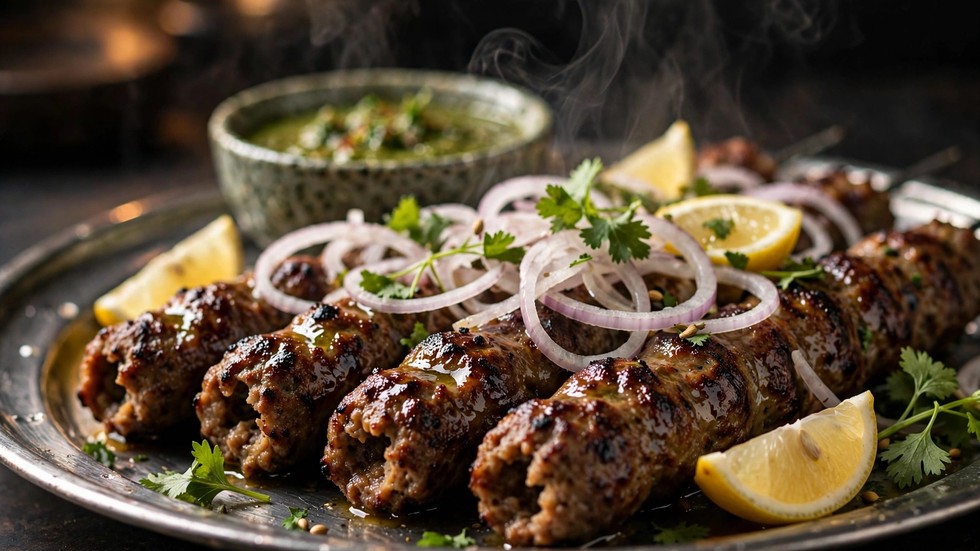
To serve: thin onion rings, lemon wedges, mint chutney, and hot naan or parathas.
Air Fryer Seekh Kebabs: Step-by-Step Method
Step 1: Wring the onion until it surrenders.
Grate the onion on the coarse side of a box grater, pile it into a clean kitchen towel or muslin cloth, and twist until no more liquid drips out — then twist some more. You should end up with a compact, almost dry-feeling ball about half its original volume. This feels excessive. It isn’t. Every drop of water you remove here is structural insurance later; wet onion is the number one reason homemade seekh kebabs disintegrate.
Step 2: Mix and knead the mince like dough, for 3–4 minutes.
Combine the mince, wrung onion, ginger-garlic paste, chilies, coriander, all the spices, salt, and roasted besan in the large bowl. Now knead — really knead, folding and pressing the way you would bread dough. This isn’t about mixing; it’s about developing myosin, the protein in meat that acts as a natural glue when worked. After a few minutes the mixture turns tacky and cohesive instead of loose and crumbly. Cold hands help; if the mince gets warm and greasy, the fat smears instead of binding.
Step 3: Chill for 30 minutes, no shortcuts.
Cover and refrigerate. Chilling firms the fat back up and lets the besan hydrate fully, so the kebabs hold their shape the moment they hit the heat. Skipping this step is the second most common cause of kebab collapse, right after the wet onion. Use the time to soak wooden skewers if you’re using them, and preheat nothing yet.
Step 4: Shape with wet hands, keeping them uniform.
Wet your hands in the water bowl. Take a golf-ball-sized portion (about 60–70g), roll it smooth, then press and elongate it around a skewer into a sausage about 12–14 cm long and 2.5 cm thick, tapering the ends. Or shape free-form logs without skewers — they cook identically. The key is uniform thickness: thin spots overcook and thick spots stay raw. Smooth the surface with wet fingers; cracks are where kebabs split.
Step 5: Preheat the air fryer to 200°C (400°F) for 5 minutes.
Seekh kebabs want fierce initial heat. A ripping-hot basket sears the exterior immediately, which sets the crust and locks the juices in — the same principle as a tandoor’s blast. While it preheats, brush each kebab lightly with melted ghee.
Step 6: Cook 12–14 minutes, turning once at the 7-minute mark.
Arrange the kebabs in a single layer with space between them — they should not touch. Cook 7 minutes, then turn each one (flat skewers make this easy) and brush with a little more ghee. Cook 5–7 minutes more until deeply browned with charred edges. Check the thickest kebab with a thermometer: 74°C (165°F) means done. Pull them at temperature, not by the clock — every air fryer runs a little differently.
Step 7: Rest 3 minutes, then finish like a kebab-wallah.
Transfer to a warm platter and rest for 3 minutes; the juices redistribute instead of flooding the plate on first cut. Brush once more with ghee, scatter over onion rings, squeeze lemon over everything, and serve immediately with mint chutney and hot naan. The lemon isn’t garnish — its acidity cuts the richness and makes the spices pop.
Pro Kitchen Tips
- Fat percentage is the recipe. If your butcher will do it, ask for an 80/20 grind. If you’re stuck with lean supermarket mince, work in a tablespoon of cold grated butter — it melts during cooking and mimics the missing fat.
- Keep everything cold. Cold mince, cold bowl, cold hands. Warm fat smears and won’t bind; cold fat stays in distinct pockets that melt into juiciness in the heat. On a hot day, chill the shaped kebabs 10 extra minutes.
- Don’t press or squeeze while cooking. Every press pushes juice out onto the basket where it burns instead of staying in the kebab. Turn gently, once, and leave them alone.
- Make a double batch and freeze raw. Shape the extras, freeze solid on a tray, then bag them. Cook from thawed (overnight in the fridge) with 2 extra minutes — weeknight kebabs with zero weeknight effort.
- The ghee brush does triple duty. It promotes browning, adds flavor, and gives that glossy restaurant finish. Butter works; ghee’s higher smoke point makes it the better choice at 200°C.
Troubleshooting Advice
- They fell apart or slid off the skewers. The onion wasn’t dry enough, the mince wasn’t kneaded long enough, or the chill was skipped. There’s no mid-cook fix — but the mixture can be salvaged: knead it 2 more minutes, chill 30 minutes, and reshape. Next time, wring that onion like it owes you money.
- They came out dry. Two suspects: the mince was too lean, or they overcooked. Pull at 74°C (165°F) internal — carryover heat adds a couple more degrees during the rest. And seriously consider the 80/20 grind; leanness is the enemy here.
- No char, pale and steamy-looking. The basket was overcrowded or the preheat was skipped. Kebabs need space and fierce heat. Cook fewer at a time, and finish with 2 minutes at 205°C if your model allows — that final blast is where the char happens.
- Burnt outside, raw inside. The kebabs were shaped too thick. Keep them at 2.5 cm max. If it happens mid-cook, drop the temperature to 180°C and give them a few more minutes rather than cranking the heat.
- Smoke and a burning smell. Dripping fat is hitting the heating element or pooling and scorching. A loose foil sling under the kebabs catches drips without blocking airflow. Also check the bottom of your air fryer for old baked-on grease — kebab day is when it announces itself.
- They stuck to the basket. Brush the basket or the parchment liner with oil before loading, and don’t try to turn them before the 7-minute mark — the crust needs time to set and release naturally.
FAQs
Can I use chicken mince instead of beef or lamb?
Yes — use thigh mince, not breast, because you still need the fat. Chicken kebabs are more delicate, so add an extra tablespoon of roasted besan for binding and handle them gently when turning. They cook a little faster; start checking temperature at 10 minutes.
Do I really need skewers?
No. Skewers look impressive and make turning easy, but free-form logs cook exactly the same way in the air fryer. If you go skewer-less, just make sure the logs are compact with no cracks, and use a thin spatula plus tongs for the mid-cook turn.
Can I freeze uncooked seekh kebabs?
Absolutely — they freeze beautifully. Shape them, freeze solid on a lined tray so they don’t stick together, then transfer to a freezer bag for up to 3 months. Thaw overnight in the fridge and cook as normal, adding about 2 minutes. Don’t cook from frozen; the outside overcooks before the center is safe.
You might also like: 15-Minute Beef Keema with Green Peas
The smoke alarm has stayed silent for my last dozen batches, which I count as a personal victory. These air fryer seekh kebabs won’t replace a charcoal grill — nothing will — but they deliver about 85% of the roadside-stall magic with 10% of the hassle, and that trade has completely changed how often seekh kebabs happen in my house. Which is to say: weekly.