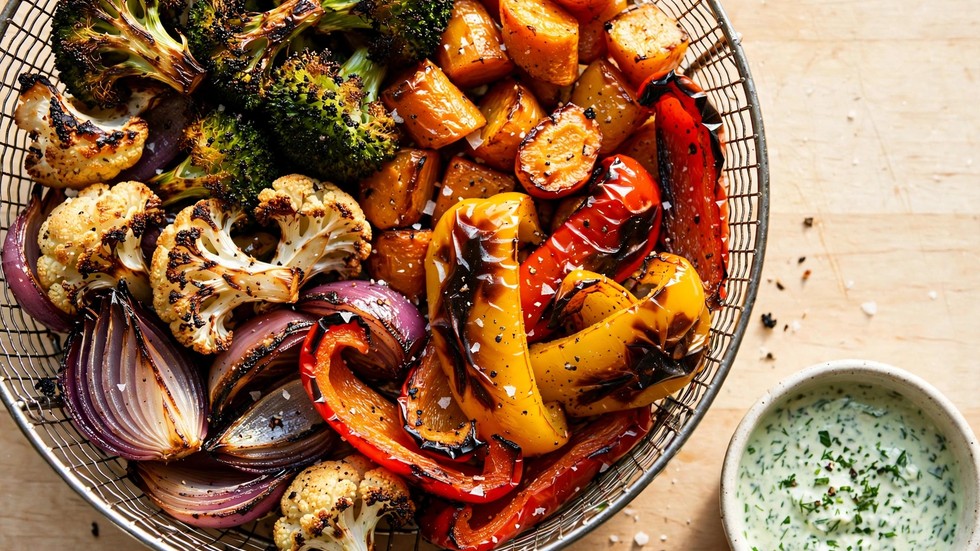
Air Fryer Roasted Vegetables: Exact Times for Every Veggie
Six months ago my sister gifted me an air fryer, and my first vegetable attempt was a crime scene. I threw in broccoli florets at some random temperature, forgot about them while answering a phone call, and pulled out a tray of blackened charcoal that set off the smoke alarm. The carrots I’d tossed in with them were still raw in the middle. Same batch, two disasters — one burnt, one raw — because I’d treated every vegetable like the same vegetable. That failure is why I tested air fryer roasted vegetables times for every veggie below.
That failure annoyed me enough to spend the next few weeks testing. I cooked one vegetable at a time, wrote down temperatures and times, and stuck a handwritten chart on my fridge. Broccoli at 200°C for ten minutes. Carrots at 190°C for fifteen. Cauliflower, zucchini, mushrooms — each one got its turn. By the end of the month I had the chart, and my roasted vegetables went from embarrassing to the thing my kids actually ask for.
Here’s what I learned: the air fryer is basically a tiny, furious convection oven, and it rewards two things above all — uniform cut size and knowing exactly when to pull each vegetable out. Once you have those two, everything else is just seasoning. This guide is that fridge chart, expanded and tested, so you never have to guess again.
Quick Stats
- Prep Time: 10 minutes
- Cook Time: 8–22 minutes (depends on the vegetable)
- Total Time: 20–30 minutes
- Servings: 3–4 as a side
- Difficulty: Easy
- Best Served With: Grain bowls, grilled chicken, dal and rice, or just a dip
Equipment Needed
- An air fryer (3.5 liters or bigger) — smaller baskets force you to cook in more batches, which is fine, just plan for it. Mine is a 5-liter, and a full tray of vegetables is about right for our family of four as a side.
- A sharp knife and a sturdy cutting board — this matters more than the air fryer itself. Even pieces cook evenly; ragged pieces burn at the thin ends while the thick parts stay raw.
- A large mixing bowl — toss the vegetables with oil and seasoning here before they go in the basket. Coating them in a bowl gives a far more even layer than drizzling oil over them in the basket.
- Tongs or a spatula — for shaking and flipping halfway. Your hands will thank you.
What You’ll Need
Vegetables (grouped by how they cook):
- Quick-cooking soft vegetables — 200°C, 8–12 minutes: bell peppers, zucchini, asparagus, mushrooms, green beans. These have high water content and thin structures, so they cook fast and can go from perfect to soggy if you leave them a minute too long.
- Medium-density vegetables — 200°C, 12–15 minutes: broccoli florets, cauliflower florets, snap peas, okra. Sturdy enough to take heat, porous enough to pick up char.
- Dense root vegetables — 190°C, 15–22 minutes: potatoes, sweet potatoes, butternut squash, carrots. These need more time and slightly lower heat so the centers cook through before the outsides burn.
- Onions and corn — 190°C, 12–18 minutes: onion wedges and corn pieces roast into something sweet and jammy. Onions especially — raw onion is sharp, roasted onion is candy.
For seasoning:
- 2–3 teaspoons of oil for every 2 cups of chopped vegetables — olive oil, avocado oil, or even mustard oil if you like a desi twist. The oil isn’t optional garnish; it’s what conducts heat to the surface and builds that crisp, browned crust.
- 1 teaspoon salt, plus more to finish — I salt before cooking and sometimes finish with flaky sea salt after, because hot oil pulls the first layer of salt inward and a fresh sprinkle on top gives you little pops of flavor.
- ½ teaspoon black pepper — freshly cracked tastes noticeably better here than pre-ground.
- 1 teaspoon garlic powder — coats more evenly than fresh minced garlic, which has a habit of burning into bitter little flecks at air fryer temperatures. If you want fresh garlic, add it in the last 3 minutes.
- 1 teaspoon paprika or smoked paprika — for color and a warm background note. Smoked paprika makes roasted cauliflower taste almost meaty.
- Optional: 1 teaspoon mixed dried herbs or ½ teaspoon chaat masala — chaat masala on roasted potatoes is one of my favorite weeknight tricks; the tangy-salty hit wakes up the whole tray.
Air Fryer Roasted Vegetables Times: Step-by-Step Method
Step 1: Cut every piece to a uniform size — about 1 inch (2.5 cm).
This is the single biggest lever on your results. A 1-inch cube of potato and a paper-thin shaving of potato will never finish at the same time, and the air fryer is too fast and hot to forgive the difference. Keep florets whole but similar-sized, cut carrots into coins or half-moons no thicker than a finger, and halve thick asparagus spears. If a batch has mixed sizes, the small pieces become charcoal while the big ones stay hard in the middle. Uniformity is the whole game.
Step 2: Preheat the air fryer for 3–5 minutes at your cooking temperature.
Most people skip this and it shows. Vegetables that land in a cold basket sit there steaming in their own moisture for the first few minutes instead of searing. Preheating means the surface of the vegetable starts crisping the moment it hits the hot metal, which gives you browning instead of sogginess. I run mine empty at 200°C while I finish chopping — by the time the bowl is tossed, the fryer is ready.
Step 3: Toss with oil and seasoning in a bowl until every piece glistens.
Use your hands, not a spoon — you can feel whether every piece is coated. You want a thin, even film of oil on all surfaces, not puddles at the bottom of the bowl. The oil does two jobs here: it carries the spices so they stick instead of blowing around the basket, and it fries the very outer layer of each vegetable in the hot circulating air, which is what creates crisp edges. Dry spots steam; oiled spots brown.
Step 4: Cook vegetables in a single layer — never crowd the basket.
This is the rule I broke most often as a beginner. The air fryer works by blasting hot air around each piece; if vegetables are stacked on top of each other, the air can’t reach them and you get steamed, pale vegetables instead of roasted ones. Cook in batches if you have to — two good batches beat one crowded, disappointing one every time. Leave a little breathing room between pieces.
Step 5: Set the temperature and time for your vegetable group — the exact reference.
- Bell peppers, zucchini, mushrooms: 200°C for 8–10 minutes. Mushrooms shrink dramatically and release a lot of water — spread them out and they’ll roast instead of swimming.
- Asparagus, green beans: 200°C for 7–9 minutes. Thin asparagus spears need the shorter end; check at 7 minutes.
- Broccoli, cauliflower: 200°C for 10–12 minutes. Cut florets with some flat sides — flat surfaces sit on the hot basket and develop deep, delicious char.
- Snap peas, okra: 200°C for 10–12 minutes. Okra gets wonderfully crispy; shake it once so all sides crisp.
- Onion wedges, corn: 190°C for 12–15 minutes. Onions soften and sweeten; corn gets toasty edges.
- Carrots (thin coins): 190°C for 12–15 minutes.
- Potatoes, sweet potatoes, butternut squash: 190°C for 18–22 minutes. Cut to 1-inch cubes, and these come out fluffy inside, crisp outside.
Why the temperature split? Dense vegetables need slightly lower heat because their centers take longer to cook through — blast a potato cube at maximum heat and the outside scorches before the inside softens. Delicate vegetables do the opposite: they need high heat for a short time so the exterior crisps before the interior collapses into mush.
Step 6: Shake or flip halfway through — set a timer.
At the halfway mark, pull the basket out and shake it firmly, or flip pieces with tongs. This exposes the pale undersides to the hot air and evens out the browning. The heating element sits above the basket, so the tops brown first; shaking is how you get color all over instead of a roasted top and a steamed bottom. Don’t skip this step — it’s the difference between good and great.
Step 7: Check doneness by piercing, not by the clock.
Every air fryer runs a little hot or cold, and a thick carrot from the market behaves differently than a thin one from the supermarket. At the last minute, pierce the thickest piece with a knife or fork — it should slide in with just a little resistance, and the edges should look browned and slightly crisped. If the color looks right but the center resists, give it 2 more minutes. Trust the vegetable, not the timer.
Pro Kitchen Tips
- Parboil dense vegetables for a head start. If I’m roasting potatoes or carrots alongside quicker vegetables, I boil them for 5 minutes first, drain them well, and let them steam-dry. The roughened, slightly softened surface crisps up spectacularly in the air fryer, and everything finishes at the same time.
- A pinch of cornstarch is a crispiness cheat code. Toss potato or cauliflower cubes with half a teaspoon of cornstarch along with the oil. It forms a thin, crackly coating that gets shatteringly crisp — restaurant-level texture at home.
- Lemon juice goes on after cooking, never before. Acid before roasting slows browning and can make vegetables taste flat. A squeeze of lemon over the hot tray right when it comes out brightens everything without interfering with the crust.
- Roast garlic cloves whole in their skins. Tuck a few unpeeled cloves in with any batch. They turn soft, sweet, and spreadable, and you can squeeze them over the finished vegetables like a sauce.
- Save the seasoning blend in a jar. I mix a big batch of my salt-pepper-garlic-paprika blend and keep it by the air fryer. It removes one more decision on busy nights, and consistency means I can compare results week to week.
Troubleshooting Advice
- My vegetables are soggy and pale, not crispy. Two causes, and they’re both about airflow: the basket was overcrowded, or the fryer wasn’t preheated. Spread them into a single layer, preheat next time, and if they’re already cooked, give them 3–4 more minutes at 200°C with space between pieces to rescue some crispness.
- The outsides are burnt but the insides are raw. The temperature was too high for a dense vegetable. Drop to 190°C, cut pieces smaller, and for potatoes and carrots consider the parboil trick. This is the classic dense-vegetable mistake.
- The spices taste bitter and burnt. Fresh minced garlic and dried herbs burn fast at 200°C. Switch to garlic powder for the main cook, and stir in fresh herbs or minced garlic only in the last 3 minutes. Chaat masala and delicate spice blends also do better sprinkled on after cooking.
- Everything stuck to the basket. The basket wasn’t hot enough when the vegetables went in, or there wasn’t enough oil. Preheat properly and make sure every piece has an oil film. A quick spray of oil on the basket itself before a sticky batch (like sweet potatoes) also helps.
- Some pieces are perfect, others are underdone. Mixed sizes — the most common beginner issue. Next time, sort by size before cooking, or pull the small done pieces out early and give the big ones a few more minutes.
FAQs
Can I cook different vegetables together in one batch?
Yes, if you group them by cooking time. Broccoli, cauliflower, and snap peas all finish around 10–12 minutes at 200°C, so they make a natural batch. Don’t mix zucchini with potatoes — the zucchini will collapse long before the potatoes are done. If you want a mixed medley, parboil the dense ones first so everything lands together.
Do I need to thaw frozen vegetables before air frying?
No, and that’s one of the air fryer’s best tricks. Cook frozen vegetables straight from frozen at 200°C, adding 3–5 minutes to the fresh times. The circulating hot air drives off the surface ice fast. Just spread them out well and give them an extra shake, since frozen vegetables release more water at first.
Why are my roasted vegetables not as crispy as restaurant ones?
Restaurants usually par-cook and use very hot oil in large ovens, but you can get close: preheat your fryer, use enough oil for a full coating, keep a single layer, and add the cornstarch trick for potatoes and cauliflower. Also make sure you’re actually cooking long enough — pale and soft usually means undercooked, not overcooked. Two more minutes at 200°C fixes more problems than any seasoning ever will.
That handwritten chart of air fryer roasted vegetables times is still on my fridge, though it’s faded and splattered now. I barely look at it anymore — after a few weeks of this, you start recognizing doneness by look and feel, and the times become instinct. But keep the chart anyway. The first month of guessing is exactly what this guide is for, and there’s something deeply satisfying about pulling a basket of perfectly charred broccoli out of a machine that once produced charcoal.